You know how they say a picture is worth 1,000 words? A fully stocked medicine cabinet is so much better than that.
Thursday, November 11, 2010


Wednesday, November 10, 2010
Hitting the Books

It's the end of the semester! Time to start really hitting the books. Here are my top 7 BEST study tips. I'm sharing only because I like you. (Yes, just you. There. Reading this.)
5. Location, Location, Location: Think about where you want to study. By the time finals came around, I was sick of the library. So then I had to think about where else I could study. I wanted people around, but I wanted to be able to plug my computer in so that I could listen to music without draining my battery. My favorites? Panera and Einstein’s Bagels. Free coffee refills, bagels, soup, and they won’t kick you out. I also studied in other parts of school (that nice little alcove on the second floor or the big heavy wooden tables of the seventh floor), and in my own room.* By the time the end of the semester came around, I avoided the library like the plague.
4. Use other people’s outlines: Many have come before you, many will come after you. Use other people’s outlines to explain what you didn’t understand, or show you a point of law you’ve missed entirely.
4. Use other people’s outlines: Many have come before you, many will come after you. Use other people’s outlines to explain what you didn’t understand, or show you a point of law you’ve missed entirely.
3. Make your own outlines! (Or heavily edit someone else’s): You don’t understand anyone’s language quite like your own, and the whole point of the outline is to put the law in your own words. But don’t ask me HOW to make an outline. I did it differently than everybody else. Which is to say, wrong.**
2. Study in Frequent Short Bursts: You can’t study non-stop, you’ll go crazy. Study often, but not for very long. Revise and memorize that outline for 45 minutes, take a ten minute break. Every 3 cycles make a half hour phone call, go get food, watch TV. Something to take you away from the work. Don’t take too long to relax, though, or you’ll find it really hard to get back to work.
1. Don’t go overboard. Figure out the major themes, and what cases define those major themes. You studied the cases you studied FOR A REASON. And that reason was to illustrate an important rule in the law, NOT to know an obscure fact or detail.
What are your well-guarded study secrets that you’re willing to share for the good of all? Help a friend in the comments!
______________________________
*Not very often though. Studying in my room is far too distracting.
**Not that doing it wrong didn’t work out.
Monday, November 8, 2010
It's Time to Stop the Lies
I can't go on like this. The lies must end. It's time we tell the 1Ls the truth, guys. Let's just end the feeling of sickening dread and turn it into panic.
Dear 1Ls:
You know how we keep telling you it gets better? Well, from this moment onward, it gets worse. There are 40 days left in the semester, and you had best be gearing up for finals. Got your outlines done yet? Have you STARTED your outlines yet? Because you're going to need those. Soon.
All that studying you've done all semester, the faithful note-taking, the perfect class attendance? Hopefully it pays off, because you're about to spend ten hours a day by yourself reviewing for three final exams. And I know your final LARC assignment is due in two weeks. So good luck finishing that on top of finishing all of your outlining and note-taking. (Pro Tip: Get an external hard drive. You wouldn't be the first person to lose all of your outlines and papers because of an unexpected hard drive crash. Back up every two days. At least.)
Do you know what your personal stress symptoms are? You're about to. Stress for me manifests as tightness in my jaw and spreads up the side of my face until I have constant migraines. I know people who throw up from stress. So, you know, good luck with that.
And after finals, sure you'll feel "good," but you're going to be so stressed out that even when you start NEXT semester you'll be trying too hard. And then when you realize how you're going overkill, it'll be too late to slow down and relax a little.
AND THEN if you do well, you'll be on lots of committees and journals, stealing any time that you might have had. (They don't say 2L: They Work You To Death for nothing.) And you'll still be stressed because you're under the gun.
So yeah, it gets worse. Good luck with that.
Love,
Me
P.S. It's almost over. You'll survive this, trust me. Everyone before you has, and many after you will. It's hard as hell, but you'll be fine if you just stay cool. I promise.
Dear 1Ls:
You know how we keep telling you it gets better? Well, from this moment onward, it gets worse. There are 40 days left in the semester, and you had best be gearing up for finals. Got your outlines done yet? Have you STARTED your outlines yet? Because you're going to need those. Soon.
All that studying you've done all semester, the faithful note-taking, the perfect class attendance? Hopefully it pays off, because you're about to spend ten hours a day by yourself reviewing for three final exams. And I know your final LARC assignment is due in two weeks. So good luck finishing that on top of finishing all of your outlining and note-taking. (Pro Tip: Get an external hard drive. You wouldn't be the first person to lose all of your outlines and papers because of an unexpected hard drive crash. Back up every two days. At least.)
Do you know what your personal stress symptoms are? You're about to. Stress for me manifests as tightness in my jaw and spreads up the side of my face until I have constant migraines. I know people who throw up from stress. So, you know, good luck with that.
And after finals, sure you'll feel "good," but you're going to be so stressed out that even when you start NEXT semester you'll be trying too hard. And then when you realize how you're going overkill, it'll be too late to slow down and relax a little.
AND THEN if you do well, you'll be on lots of committees and journals, stealing any time that you might have had. (They don't say 2L: They Work You To Death for nothing.) And you'll still be stressed because you're under the gun.
So yeah, it gets worse. Good luck with that.
Love,
Me
P.S. It's almost over. You'll survive this, trust me. Everyone before you has, and many after you will. It's hard as hell, but you'll be fine if you just stay cool. I promise.
Wednesday, November 3, 2010
Lawsuits, Lawsuits Everywhere (And No One Willing to Be the Plaintiff)
One of the major problems with law school is seeing lawsuits EVERYWHERE. Everywhere you turn is another tort, and not of the delicious variety. Watching people text and cross major intersections is cringe-inducing. (Contributory/Comparative Negligence!) Puddles on the floors of restaurants make me downright ill. (It's a slip and fall waiting to happen!) Day-to-day life is fraught with future legal responsibilities, which is why it's important to be careful and take care of your fellow man. Because if you don't your fellow man could sue.
And in many cases, that fellow man does sue. But how many times do people try to turn frivolity into a lawsuit? Something tells me its more often than not, though I don't really have statisitics. On the other hand, how many times do we, as outsiders, perceive something as frivolous litigation, when in reality it's truly important. For instance, in the McDonald's coffee case, which most people have laughed at a time or two, the plaintiff was an 80 year old woman who had severe third-degree burns in her pelvic region because she was unable to remove her pants in seven seconds or less. No cup of coffee should do that to a person so fast. She was rightly awarded a half million dollars.
And if there are so many frivolous cases perceived as important and vice versa, how many cases never materialize at all because the prospective plaintiff does not want to go through the hassle of litigation or sees the case as frivolous herself? Especially in situations of medical malpractice or insurance litigation, a plaintiff may see herself as too small to fight the red-tape system, or that "it wasn't so bad, after all." But people, hospitals, corporations, and insurance companies owe their neighbors, clients, and patients a duty of care. By not confronting the other side, prospective plaintiffs are allowing prospective defendants to set a lower bar when it comes to their duty of care. A hospital that does not get confronted about its bad behavior when it comes to delineating post-op care is not going to provide good post-op care to the next patient either.
Am I saying that we should all be suing each other non-stop in order to make the world a better place? No. Of course not. But I am saying that if you have a problem, you have the duty to at least stand up and say "enough." Even if you aren't willing to be a plaintiff.
And in many cases, that fellow man does sue. But how many times do people try to turn frivolity into a lawsuit? Something tells me its more often than not, though I don't really have statisitics. On the other hand, how many times do we, as outsiders, perceive something as frivolous litigation, when in reality it's truly important. For instance, in the McDonald's coffee case, which most people have laughed at a time or two, the plaintiff was an 80 year old woman who had severe third-degree burns in her pelvic region because she was unable to remove her pants in seven seconds or less. No cup of coffee should do that to a person so fast. She was rightly awarded a half million dollars.
And if there are so many frivolous cases perceived as important and vice versa, how many cases never materialize at all because the prospective plaintiff does not want to go through the hassle of litigation or sees the case as frivolous herself? Especially in situations of medical malpractice or insurance litigation, a plaintiff may see herself as too small to fight the red-tape system, or that "it wasn't so bad, after all." But people, hospitals, corporations, and insurance companies owe their neighbors, clients, and patients a duty of care. By not confronting the other side, prospective plaintiffs are allowing prospective defendants to set a lower bar when it comes to their duty of care. A hospital that does not get confronted about its bad behavior when it comes to delineating post-op care is not going to provide good post-op care to the next patient either.
Am I saying that we should all be suing each other non-stop in order to make the world a better place? No. Of course not. But I am saying that if you have a problem, you have the duty to at least stand up and say "enough." Even if you aren't willing to be a plaintiff.
Monday, October 25, 2010
Gather Around and You Shall Hear...
Of the cite-checking journey of Amanda the Law Student!
Wait, that doesn't work.
Typing this real fast while I scarf down some mac and cheese before class. (My dietary habits have really gone straight to hell.)

"What is that?" I hear you saying. THAT is a cite-checking binder and it is 2 inches thick of paper, and 10 hours of work SO FAR. Some advice for all you 1Ls planning your future: When thinking of taking on journal responsibilities, think of all the work you'll have to do, then multiply it by two. Because "Staff Member of ________" really means "Journal Bitch Who Does the Scut Work."
Cite-checking:
1. Find all of the sources mentioned in the citations you're checking. They must be PRINT versions or the scanned PDFs of print versions. Even in the age of the internet, there can be NO internet sources.
2. Make copies of all of those sources. However many copies you will need.
3. Separate those sources by citation. Put them in a handy tabbed binder.
4. Get out your handy dandy highlighter because now you get to find what all of the information in the article you're cite-checking refers to in the sources! Highlight all of that source material so that your editors know exactly where it came from. Also don't forget the publication/decision date, author's name, page number, and name of journal/reporter. Or you will have to go back to step 2 and make more copies.
5. Editing below and above the line. Remember my "Journal Bitch" comment above? Yep! Now you get to go through and make sure EACH of the author's citation formats are correct. For over 100 sources! Because the author is a 60 year old man who can't be BOTHERED to format his own citations. That's why we have staff members! Then you edit the actual text, to make sure there are no grammar or plagiarism style mistakes.
6. Turn in your binder to editorial board members who will inevitably tell you that you didn't do it right.
7. Wait for next hellish assignment.
It's due tomorrow and I haven't started step 5 yet.
Yep. Worst. Decision. Ever.
Anybody out there have a different/similar journal experience they'd like to share?
Wait, that doesn't work.
Typing this real fast while I scarf down some mac and cheese before class. (My dietary habits have really gone straight to hell.)

"What is that?" I hear you saying. THAT is a cite-checking binder and it is 2 inches thick of paper, and 10 hours of work SO FAR. Some advice for all you 1Ls planning your future: When thinking of taking on journal responsibilities, think of all the work you'll have to do, then multiply it by two. Because "Staff Member of ________" really means "Journal Bitch Who Does the Scut Work."
Cite-checking:
1. Find all of the sources mentioned in the citations you're checking. They must be PRINT versions or the scanned PDFs of print versions. Even in the age of the internet, there can be NO internet sources.
2. Make copies of all of those sources. However many copies you will need.
3. Separate those sources by citation. Put them in a handy tabbed binder.
4. Get out your handy dandy highlighter because now you get to find what all of the information in the article you're cite-checking refers to in the sources! Highlight all of that source material so that your editors know exactly where it came from. Also don't forget the publication/decision date, author's name, page number, and name of journal/reporter. Or you will have to go back to step 2 and make more copies.
5. Editing below and above the line. Remember my "Journal Bitch" comment above? Yep! Now you get to go through and make sure EACH of the author's citation formats are correct. For over 100 sources! Because the author is a 60 year old man who can't be BOTHERED to format his own citations. That's why we have staff members! Then you edit the actual text, to make sure there are no grammar or plagiarism style mistakes.
6. Turn in your binder to editorial board members who will inevitably tell you that you didn't do it right.
7. Wait for next hellish assignment.
It's due tomorrow and I haven't started step 5 yet.
Yep. Worst. Decision. Ever.
Anybody out there have a different/similar journal experience they'd like to share?
Friday, October 22, 2010
Chi-Town, I Love You

The other night, coming home from class I saw the Parks and Recreation trucks out. What were they doing? Putting the winter lights up in the trees. When they're on, they light up my way home, twinkling the whole way. When it gets colder out and starts to snow, the air literally sparkles as your breath steams in front of you in the air.
There aren't a ton of trees out in the city, but the ones I can see out the window right now are a cheery sort of yellow, and if you walk by Grant Park, it's riotous color. The sun comes up later these days. It's perfect to leave your curtains open, and let the sun help you wake up. It reflects on the twisted metal buildings across the street and hits my pillow at exactly 7:08 am. Good morning, Chicago. It's time for another wonderful day.
Walking past the bakery every morning is a delight and a temptation. Is there anything like the smell of warm, fresh-baked bread at 8 am? Is there anything like being able to stand on the street corner, waiting for the light to change in the crisp air, drinking in that smell of goodness? The sky's so blue it's blinding, even in October and the people are actually smiling because their commute won't be uncomfortable for the next few weeks.
The buildings are gorgeous, and there's always something unexpected around the corner. I have the feeling sometimes that I'm right where I ought to be.
Chicago, I love you.
Even if you will have a distinct odor of hobos and french fries tomorrow.
Wednesday, October 20, 2010
I'm Really Underqualified for This
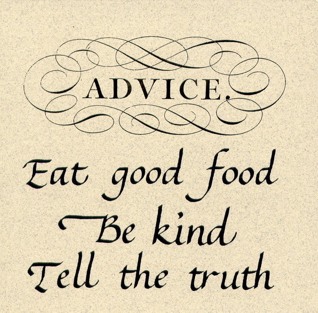
1. Structure. Structure your days. Give yourself a schedule. Tell yourself that you WILL be in the library by 9 am. I woke up at 6:45 every morning, went to school and read until my first class at 10:30. I had class from 10:30 to 12, lunch from 12-1, and then I went back to the library at 1 to finish my reading. I went to my afternoon classes, and then back to the library for any reading I hadn't gotten to yet. If I had any legal writing to do, it was done at home after class and a break. Making sure my days had structure was a great way to make sure everything got done, and that I had free time at night. By staying on top of my schedule, I could almost always quit working at 8 pm and go to the gym or watch tv.
2. Stay ahead. This is the best (and only) advice I received before starting law school. If you stay a week ahead of your reading, it won't matter if you have to skip it now and then to work on something more important, like the interoffice memo due before Thanksgiving break. You won't get behind if you plan to stay ahead. It makes the first week grueling, but after that it makes your life so much easier.
3. Sleep. I cannot stress the importance of sleep enough. Most law students don't get enough sleep and are exhausted all the time. Look, it's better to skip reading that last case tonight so that you can focus in class and take notes tomorrow. Chances are pretty good that you won't get called on anyway. I don't know about you, but I'm so much more productive when I sleep, and those who sleep have a stronger immune system. Remember, you can't afford to get sick.
4. Medicate. Don't be ashamed. An ounce of prevention is worth a pound of cure, right? If I had taken better care of myself and had seen the doctor when I didn't feel good, I probably wouldn't have gotten swine flu, nearly gotten pneumonia, or landed in the emergency room for poisoning my system. (And that was all first semester!) Being sick takes time. If you have a cold, take that daytime cold medicine to get you through the long schoolday and then take the night time medicine so that you get the sleep you so rightly deserve. And if your body is trying to tell you something, LISTEN. Seeing a doctor now could save you a whole day of not being able to get out of bed later.
5. Synthesize. You're being tested on themes, not individual cases. There's a reason you're supposed to be pulling the rules out of those cases, not anything else. You want to know how the law fits together for the exam, not every random thing that came up in class. I've seen people study some really stupid things that never came up on the exam. Every moment you study something useless is a moment you could be sleeping. (Have I mentioned how important I find sleep?)
But the major piece of advice I would give any 1L is "Take a chill pill." It's school. You've been doing school your whole life. It's just a new kind of learning. You'll do so much better if you relax and look at the big picture.
Subscribe to:
Posts (Atom)